
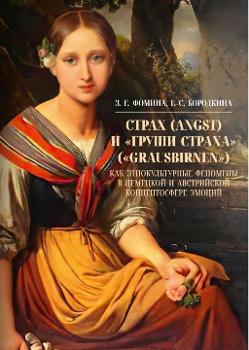
The Dostoevsky Russian Christian Academy of Humanities publishing house (Saint Petersburg) has published the monograph ““Fear” (Angst) and “Pears of Fear” (“Grausbirnen”) as ethno-cultural phenomena in the German and Austrian conceptual framework of emotions”. The authors of the book are Professor Zinaida Fomina, DSc in Philology, Honoured Worker of Higher Professional Education of the Russian Federation, and Associate Member of the Russian Academy of Natural Sciences of the Russian Federation, and Galina Borodkina, PhD in Philology, Associate Professor at the Department of German Philology of the Faculty of Romance and German Philology of Voronezh State University.
The monograph was reviewed by well-known international and Russian scientists. The text of the monograph is preceded by a review by Heinrich Pfandl, an Austrian professor of Slavic Philology at the University of Graz (Austria). The review presents a detailed analysis of the work prepared by Zinaida Fomina and Galina Borodkina.
Professor Andrei Levitsky, DSc in Philology (Lomonosov Moscow State University), and Professor Lubov Nefedova, DSc in Philology (Moscow State Pedagogical University), also gave positive reviews of the book. Austrian Professor Rudolph Moore (University of Graz (Austria)) followed the progress of the book, supported the project, and emphasised the importance of publishing this work in German and English.
The monograph presents a sort of existential “anatomy of fear” and describes the structure of the emotional concept “Angst”, its components, external and internal conceptual signs, internal form, the specifics of its constituent elements, etc. According to the observations of Zinaida Fomina and Galina Borodkina, a special role in this process belongs to lexical means representing various semantic types of vocabulary, each of which on its own can actualise one of the many conceptual aspects of this emotion, while put together they can represent it as a system.
The authors of the monograph also highlight and describe the so-called pandemic (COVID) vocabulary, which has become significant since 2019. What is more, in 2020 the key lexical unit of the “COVID era”, “Coronapandemie” (COVID pandemic), was recognised as the “word of the year” in the German language. In Germany and Austria, all words belonging to the topic of “COVID” correlate with the “Angst” phenomenon.
In the monograph, Zinaida Fomina and Galina Borodkina identify and analyse a very voluminous corpus of words associated with the emotion of fear, which are a result of a continuous mental “act of creation”, the cognitive activity of the neural networks of the human brain generating more and more associative bonds.
The book describes in detail the national and cultural specifics of the metaphorisation of the emotion of fear in similar but non-homogeneous language spaces: German and Austrian. Zinaida Fomina and Galina Borodkina consider the conceptual metaphor as a means of objectifying the national and individual author's perception of the concept “Angst”. They present a typology of conceptual metaphors that objectify the concept “Angst” in the texts of modern German and Austrian fiction and periodicals and newspapers. They also provide the structure and detailed description of the metaphorical model of emotions belonging to the “Angst” group. They identify and systematise the cognitive classifiers of metaphors related to the concept “Angst”, determine their epistemological role in the formation and determination of its architectonics.
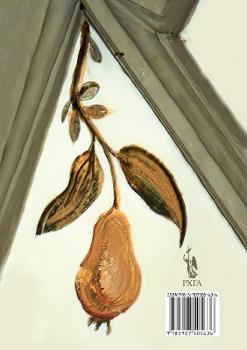
The monograph contains illustrations by outstanding German (A. Dürer 1513, P. Klee 1934) and Spanish (F. Goya 1796) artists, which visually and meaningfully correlate with the description of the emotional concept “Angst”.
The monograph is of particular interest for readers since it focuses on the phenomenon of “Angst”, one of the basic constructions in the emotional picture of the world of Germans and Austrians; it also develops a new conceptual philosophy of fear; it provides new knowledge about the concept “Angst” in German and Austrian linguocultures. What is more, it is a highly efficient multi-aspect study based on the latest methodological strategies written in understandable terms.
The monograph is aimed at specialists in Philology, Germanic Philology, specialists in the field of emotive linguistics, cognitive science, history of emotions, ethnolinguistics, linguoculturology, text linguistics, media linguistics, intercultural communication, as well as university lecturers, young scientists, and those who study the problems of emotions in related fields of knowledge: philosophy, cultural studies, social studies, psychology, history, etc. The monograph can be found in the Regional Scientific Library of Voronezh State University.