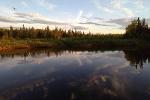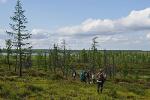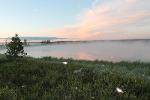

Olga Yakimenko, a PhD student of the Department of Geoecology and Environmental Monitoring of the Faculty of Geography, Geoecology, and Tourism of VSU took part in an international geobotanical expedition to Yamalo-Nenets Autonomous Okrug as part of a research project on the geobotanical assessment of the deer-feeding capacity of pastures. Th project was initiated by the Department of Science and Innovations of the Yamalo-Nenets Autonomous Okrug.
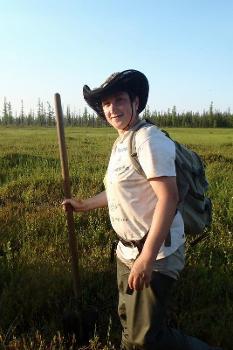
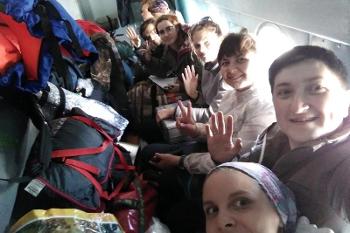
The expedition included geobotanists, bryologists, lichenologists, map-makers, experts in landscape and soil studies, and other specialists form Moscow State University, the Botanical Institute of the Russian Academy of Sciences, A.N. Severtsov Institute of Ecology and Evolution, Ural Federal University, Central Siberian Botanical Garden, Zubrov State Ocean University, as well as representatives of the Central Institution for Meteorology end Geodynamics in Austria. The expedition was divided into three teams of 15 people, who carried out their studies at different time intervals. They used helicopters, TRAKOL off-road vehicles, and Ural trucks to get to their destinations and transport the equipment.
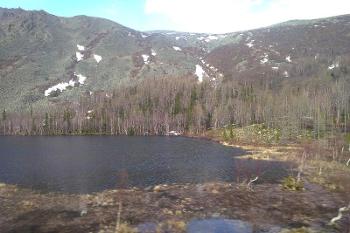
The first team had to cover 4 areas. Their job was to conduct a full-scale study of swampy and boggy areas in 4 natural zones – the middle boreal, the north boreal zone, forest tundra, and the foothills of the Polar Urals. The team spent 10 days in each zone within which they had to complete over 80 geobotanical descriptions and soil profiles, determine the depth of permafrost extent, as well as to collect and identify mosses and lichens.
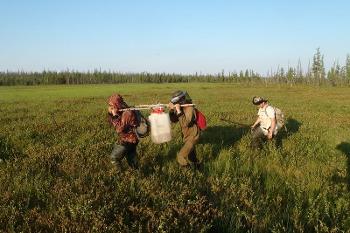
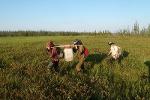
Olga Yakimenko was in charge of the phyto-collectors in the first team. Her task was to make sure that the required number of phytomass samples were collected in 3 repeats. First, the team had to collect and mow the samples. Then the samples were separated into nutrative groups (sedge, gramineous plants, herbs, shavegrass, subshrubs, shrubs, etc.) under laboratory conditions. The phytomass was then dried in a portable laboratory and weighed with a precision of up to 0.5 units. All the data was recorded in tables.
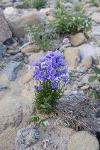
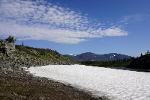
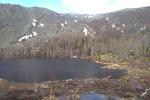
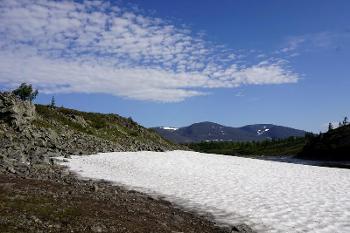
“We covered up to 15 km a day, making our way through swamps, crossing cold streams, and climbing the mountains as high as 1 km. Besides collecting the phytomass, the team also had to solve everyday problems. There were always two phyto collectors in the camp to cook and to make sure that the phytomass was dried properly. By the end of the expedition we managed to collect samples of over 200 species of the local flora. We also completed over 600 geobotanical descriptions, made a vegetation map and a permafrost map of the Yamalo-Nenets Autonomous Okrug and the Priuralsky District. In total we collected and weighed over 200 phytomass samples”, – said Olga Yakimenko.
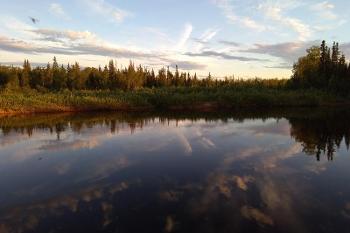
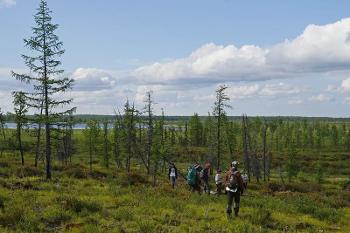
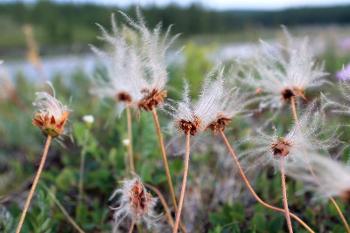
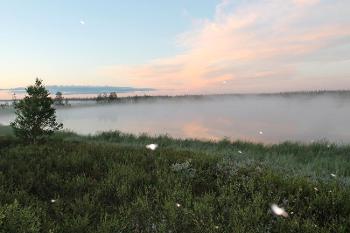
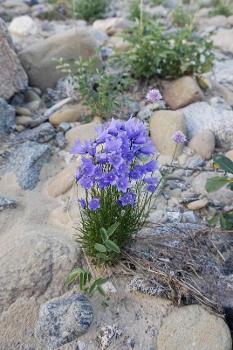
“The northern regions of Russia are amazing. You just can’t help loving the northern nature. On my way to Labytnangy city, where a research base of the Arctic Research Centre is located, I saw spring blooms, although it was June 20. At our first stop we saw blooming cowberry, cloudberry, and cranberry. The temperature was up to 30 degrees Celsius. 40 days later, when we came to our last stop at the foothills of the Ural Mountains, we saw that it was autumn already, the grass faded, and all the berries were ripe. Such a short summer is enough for the plants to complete their vegetation cycle. The polar day gives enough light and heat for the plants to produce seeds. It took us several days to get used to the polar day. It was rather difficult to sleep when it was not dark, but we were usually exhausted after a trip or a day’s work, so quite soon we stopped noticing it”, Olga told us.
She also managed to collect 130 sheets of herbarium materials which will be included in the herbarial collection of the Faculty of Geography, Geoecology, and Tourism as a separate collection called “Vascular Plant Herbarium VORG”.