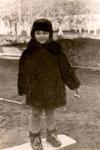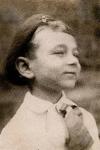

When the Artek children's camp was celebrating its 90th anniversary in 2015, Voronezh Pedagogical University, which actively cooperates with Artek, issued a call in the city to find those who stayed in Artek at the beginning of its history. Vladimir Listengarten responded to the call:
“I am one of those!”
And that is how the memoirs appeared.
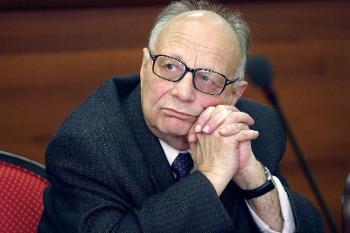
“In 1941, I graduated from the first grade, and on a Sunday morning, June 22, my parents, my first teacher, and her granddaughters went for a walk in a park. It was a clear, sunny day. We climbed on top of the so-called “bald mountain”. It started to drizzle and we decided to go back home and when leaving the park we heard V.M. Molotov's announcement about the treacherous attack of fascist Germany. And then things happened really fast: my father’s institution was turned into an emergency response regiment…”
The father of Vladimir Listengarten worked in the financial department of the Voronezh construction trust which was converted into an emergency response regiment at the beginning of the war. When his father was leaving home (he did not know whether he would come back), he took the most important and necessary things, including some family photos.
The regiment of Semion Listengarten survived all military actions that took place in Voronezh.
“The people from the trust, all of them, had a rough time,” said Vladimir Listengarten. “For example, my father would remember a friend of his, who being a native-born resident of Voronezh joined the forces to serve as a guide. And he died. Later, Semion Listengarten wrote about him in the “Kommuna” newspaper...
After the liberation of Voronezh, the regiment regained the status of a trust and took part in restoring the city.
But this happened much later.
“My Mum was called up to work in hospital (it was located opposite the present VSU hall of residence No. 1). I had to join the senior group at the kindergarten again to have someone to look after me. Soon, some children from the western areas of Ukraine who had escaped from the Nazis, joined our kindergarten. I was haunted by the stories of these children: how they being absolutely defenceless were hunted by fascist pilots.
The reports were increasingly alarming, and in October 1941 the families of the hospital staff were evacuated. My mother was assigned as an escort and my grandmother and my cousin, who had fled to Voronezh from Moscow bombings, also went with us.
Our journey took a month, and on 7 November we arrived in the city of Fergana of the Uzbek SSR. Our life following the evacuation started. I remember a disorderly life, being constantly hungry, cold, scared for my father, and waiting for news from the frontline. I graduated from the second grade, basically extramurally, since my school was three kilometres away from our rented room on the outskirts of the city. Then my mum managed to convert a former stable in the yard of the laboratory where she worked into a living accommodation. So in the third grade I had a chance to study properly.
In the truest sense of the word we lived on messages from the frontline and my father’s letters (he remained in Voronezh, and after that in the immediate battle area). I remember his letters about the bombing of the pioneer garden where children died, Konstantin Simonov’s poem “Son of an Artilleryman”, which I read in a newspaper, articles by Ilia Erenburg, visiting hospitals where we performed, saying goodbye to my brother who had just graduated from the ninths grade and was joining the army, my becoming a pioneer and anticipating, anticipating the happy moment when the fascists would be driven away and we would be able to return to Voronezh...”
“My father wrote absolutely remarkable letters,” said Vladimir Listengarten. “You would read them to tatters!
The letters are gone, time didn’t spare them. But the photos that my father took with him when he was leaving home are still here.
There was no electricity, we only had an oil lamp.
We had no paper and wrote, literally, between the lines in newspapers and books.”
Vladimir Listengarten said that they took life as it was, no one was thinking about what kind of life they lived:
“Neither me, nor my peers, no one had a feeling that it was going to get worse. Though, life was tough (very tough) for everyone. But we had a feeling that things would change and life would get better. What’s more, (now it is absolutely clear to me) the state did not abandon people. Especially kids.
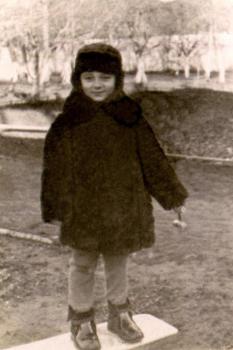
During the evacuation in Fergana, we had a chance to visit extended daycare groups and clubs. During the long break at school, we were always given a piece of bread with sugar or fish oil.”
A characteristic detail of that time, which proves the words of Vladimir Listengarten is that there were storage water heaters with boiling water at every railway station: it was around the clock and free of charge.
“It's not a big deal but it means a lot to people. Of course, we felt both cold and hungry but we didn’t feel disparate. Everyone believed in victory.”
“In July 1943 the first part of the dream (and I dreamed continuously, day and night) came true: we returned home, to Voronezh, which was almost completely destroyed but it was returning to life. And a new kind of life started. It was also full of difficulties but it was life in anticipation of the victory. I should say that this anticipation was not passive: we, pupils of first primary (No. 1) and then junior (No. 16) school, tried to participate in all adult activities aimed at restoring normal life in the city. One of the first institutions restored in Voronezh was the Palace of Pioneers.”
The telegram saying that they were returning home to Voronezh, which the mother of Vladimir Listengarten had sent to their relatives, was a day late. They were so eager to return home as soon as possible.
“When we left the train, my mother didn’t know where to go,” said Vladimir Listengarten. “The city looked totally different.”
The Palace of Pioneers and schools were the first to be restored in Voronezh.
“Life wasn’t depressive at all. Of course, Voronezh had been 95 percent destroyed but I remember the family of a classmate of mine whose apartment had been destroyed and who rigged up a shelter under the stairs, they worked and studied and did not feel depressed. Life went on.”
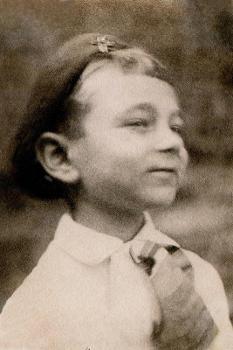
The first post-war session in the All-Union pioneer camp “Artek” was a year before the end of the war, three months after the liberation of the Crimea in May of 1944.
A group of children from the Voronezh Region was sent to “Artek” by train. Among them was Volodya Listengarten.
“Frankly speaking, I am surprised at my parents: how could they let me go? The war was still going on, after all!
In Artek, there were also children from Belarus and Ukraine.
These guys had been in the partisan squads.
One guy from West Belarus told us that a German teacher with a long index finger was sent to their school. And the German teacher hit the pupils on their heads with this finger. After that, this guy joined the partisans.”
* * *
“On night of 9 May, they were alerted.
They stood in line to hold a meeting.
Victory!
I looked around and saw that the children were crying. And it was a shock to me.
People suddenly realised how they had grieved. They realised that victory was not only about rejoicing.
The war was over, but grief remained. Adults understood this, so did the children.”
“In “Artek” there was a man, he seemed old to us, though, in fact he wasn’t. He accompanied us everywhere and took us on trips. And the locals told us that during the war Germans used him to carry water… I used to think: “Well, I was in “Artek” in May 1945, so what?” But now I understand: now it is history.
Pavel Ponomarev
Photos from personal archives of the speaker