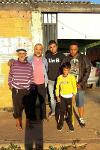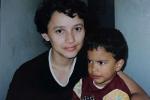

Brazil is a wonderful country, but even more wonderful are the people of Brazil. Always smiling and cheerful, they will never say “bad” when asked “How are you?”. Our hero today is Eduardo Roberto Silva Melo. Eduardo is his name, Roberto is his father’s name, and Silva Melo is his family name. Eduardo was born in Brasilia, the capital of Brazil.
He has always loved people and nature. After school he entered a psychological faculty. He wanted to know what people think about and understand human psychology, the way they perceive the world around them, and their mindsets. However, after his first year at university Eduardo realised that he wanted to do something different. So he quit his university and moved to Russia, where he continued his studies at the Faculty of Biomedical Sciences of Voronezh State University. After a year on a pre-university training programme he was back again on his road to success. Eduardo is a fourth-year student now and has a very active lifestyle.
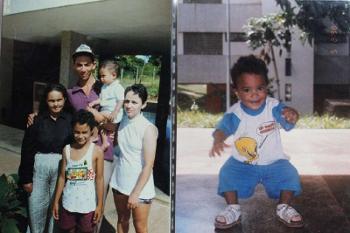
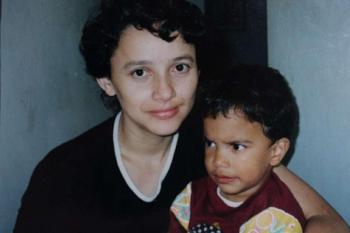
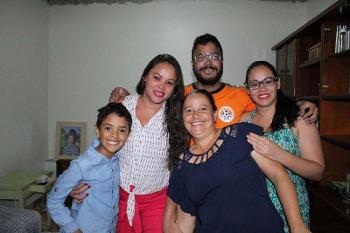
Morning
08:00
Eduardo likes to have a lie in, so he’s always late for the first class. He starts his morning with a cup of coffee - a wake-up drink for a sleepy student. He usually reads news and books or watches TV shows while having breakfast. Eduardo reads practically everything in Russian, because it helps him to understand the language better and learn new words.
“What are you reading now, Eduardo?”
“I’m reading Conversations with Friends by Sally Rooney”.
“And what kind of books do you like? Do you have favourite genres or writers?”
“One of my favourite Brazilian writers is Clarice Lispector. She wrote about the transition of human personality from the conscious level to the biological level. She is considered by many to be an existentialist writer. I’m also fond of Isaac Asimov, who coined the term “robotics”. I even identify with him a bit. We have the same birthday, January 2!”
“Do you read any Russian literature?”
“I like The Brothers Karamazov and White Nights by Dostoevsky. And I like the poetry of Mayakovsky. His poems are hard to understand, but you can learn a lot from them”.
Besides reading, Eduardo also writes his own poems and fan fiction. He wrote an interesting fanfic about the properties of a fractal (an object which is characterised by self-similarity, i.e. whose parts are completely or approximately similar to the whole). For Eduardo, fractals are the key to understanding the world. He even has a tattoo of a fractal.
9:00–11:00
Eduardo makes his plans for the day and sets out to the university. He usually gets there by a trolleybus. He likes trolleybuses because they are more environmentally friendly than buses and cars. Besides, there is the No.7 trolleybus which takes him directly to the university building.
“Was it difficult for you to get used to the public transport system in Voronezh?”
“Yes! At first I couldn’t quite figure out how you move around in Voronezh, with so many buses and different routes. But then my roommate Tristan showed me some Russian map apps. They were really handy. I also had to get used to the fact that here in Russia you pay when you get off the bus, not when you get on. In Brazil, you can’t get on a bus until you buy a ticket, and there is always a ticket inspector and a baffle gate at the entrance.”
“What about money? Was it difficult to get used to a different currency?”
“Yes, it was also difficult. I would go to a shop and I wouldn’t understand what to do with the roubles. I even spent everything I had several times. But then I learned how to save money. I even lived with no money for a month once. I had problems with my bank account because they had got my name wrong. Tristan helped me out again and explained how to open a new account.
Afternoon
11:00–18:00
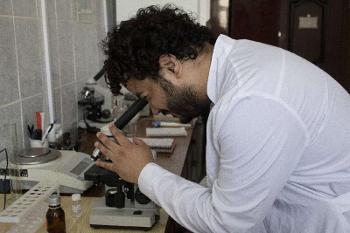
Eduardo spends the whole day studying. He is working on his course project now investigating enzymes, methods of their identification, functions, and mechanisms. He is conducting experiments with liver to study its properties. Eduardo believes that his future profession, a medical biologist, is very important. Studying the human body at the cellular level helps to learn a lot and to understand the processes occurring in our bodies.
During the breaks between classes Eduardo goes to the nearest park for a coffee and a chat with some friends.
“Do you have a lot of friends in Russia?”
“I have a few friends. Some of them are Russians, others are from Brazil, Africa, and South America.”
“Who do you find easier to get on with?”
“It depends. On the one hand, it’s easier with international students because we are all foreigners here. So you team up with people similar to you, you become sort of a family. You can’t live in a different country without any friends. You’ll feel lonely. However it is very interesting to talk to Russian students. We discuss philosophy, metaphysics, and politics. You have a deeper understanding of the world than people in other countries. Of course, there is a language barrier. I’ve even learnt several languages. Besides Portuguese, I can speak Russian, English, Spanish, and a bit of French.”
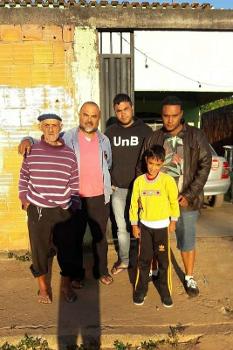
After a short break Eduardo continues his studies at the library. He often goes to the library to do his homework and to work on his course project. It is quiet here, so he can focus on his work, or just relax and read something.
Evening
18:00–21:00
When Eduardo is not too tired after his classes, he usually goes to the swimming pool or to the gym. He has other hobbies as well: photography, music, poetry, judo, and capoeira.
“What is capoeira?”
“It’s a Brazilian martial art. It combines combat manoeuvres, elements of dance, acrobatics, and music. It was hard to find a capoeira club in Voronezh, but I managed to. They have a Brazilian coach, which I think is great. So, when I have some spare time, I go there. Sometimes I just need to wind down a bit and do something I used to do in Brazil”.
“What about music?”
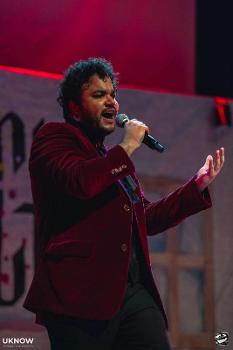
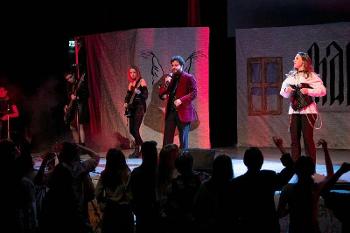
“I like playing the guitar and singing, but I can’t always do it when I want in my room. My roommates like peace and quiet and I don’t want to disturb them. I’m a student activist though, so I play music and write screenplays in this capacity. I even take part in the Students’ Spring festival sometimes.
Night
21:00
Everything else finished, it’s time for dinner. Eduardo likes cooking national Brazilian food, but it’s hard to find all the ingredients in Voronezh. So, he has to improvise with the available ingredients. Thus, Eduardo often makes galinhada prato. It is similar to Russian plov, only instead of carrots and onions, you add parsley and turmeric.
22:00–2:00
Eduardo usually spends the rest of the day studying or watching TV shows. He likes Japanese dramas, Brazilian films, sci-fi movies, and films about science. He goes to bed late at night, and always writes down his plans for the next day. Eduardo is dyslexic and often finds it difficult to focus, so planning helps him a lot.
“You have a very interesting and active life here in Russia. What would you tell your friends in Brazil about our country?”
“I would tell them about the people here. Russians have a strong sense of civic consciousness, patriotism, and identity. I think it deserves respect. You have a deep understanding of the world and you are ready to stand your ground. I would also say that Russia is a very beautiful country. I really like Russian architecture and nature. So, I would tell my friends that Russia is a nice country to live in”.
Text by: Polina Kobeleva, Veronika Bondarenko
Photo provided by Eduardo Melo