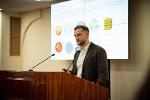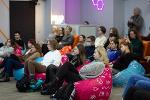

What modern methods and ways of treating tumours are available? Why cancer has not yet been cured? How do chemists help biologists solve medical issues? On 8 December, Anton Popov, PhD in Biology, Head of the Laboratory of Theranostics and Nuclear Medicine at the Institute of Theoretical and Experimental Biophysics (ITEB) of the Russian Academy of Sciences (Pushchino), senior researcher at the Laboratory of Radiation Biophysics and Biomedical Technologies at the Lebedev Physical Institute (LPI, Moscow) told the Voronezh audience about these issues and more. The lecture was held as part of the federal project “Energy of Science” by the network of Nuclear Energy Information Centres (NEIC).
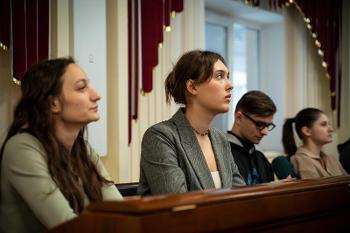
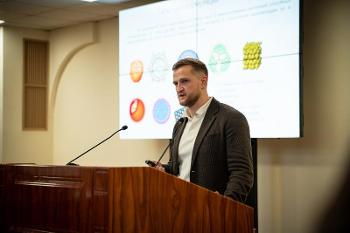
Anton Popov gave a public lecture on “Nuclear reactions inside a cancer cell: How to burn a tumour from the inside” for colleagues and students from the Faculties of Physics, Chemistry, and Biomedical Sciences. He spoke about the problems and challenges of treating cancer, how radiation helps in fighting cancer, and introduced the audience to unique developments in the field of nuclear medicine achieved by Russian scientists.
“Currently, the use of nanoparticles is quite common. They are used for the targeted delivery of substances, therapy, and diagnostics. In addition, there are many approved and successfully used drugs based on them,” said the speaker. “The use of nanoformulations creates many prospects. But in order for a tumour to accumulate the maximum amount of formulations designed by chemists, different approaches have to be considered for their transport. There are four main types of delivery of nanoformulations to the tumour growth area: passive transport, active transport, trigger transport, and active transport of cellular products.

Anton Popov spoke about each type of delivery in more detail, touching on the main challenges faced by scientists, as well as highlighting the prospects and opportunities for the development of each area. In addition, he noted the benefits of FDA-approved nanosensitisers for tumour therapy and diagnosis.
“The FDA or Food and Drug Administration is responsible for protecting the health of the US population by ensuring the efficiency and safety of medicines, biological products, and medical devices for humans and animals,” he noted. “There are different types of radiation therapy. There is distant radiotherapy, when a person is irradiated at a distance, and brachytherapy, when the source of the ionising radiation comes into direct contact with the cancerous tumour. The use of a radiosensitiser as part of radiotherapy makes it possible to increase the therapeutic window, thereby reducing the radiation dose with the same treatment efficiency. This strategy allows us to minimise the side effects of radiation therapy,” said Anton Popov.
In addition, during his presentation at the university, the speaker highlighted an issue related to boron neutron capture therapy (BNCT):
“Boron neutron capture therapy allows for the targeted cell destruction of certain malignant tumours, including those considered incurable (such as glioblastoma of the brain), and also fights the disease at a terminal stage. The preliminary accumulation of boron in tumours increases their sensitivity to neutron radiation. Then the tumour is irradiated with a flux of thermal neutrons. The absorption of the neutron by boron results in a nuclear reaction with a massive release of energy in the cell, leading to its destruction.”
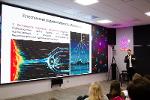
On the same day, Anton Popov held another open lecture on “Nuclear reactions inside a cancer cell: How to burn a tumour from the inside” at Voronezh Nuclear Energy Information Centre. During a popular science talk, the speaker focused on the application of modern scientific developments in the field of medicine, in particular in the treatment of cancer.
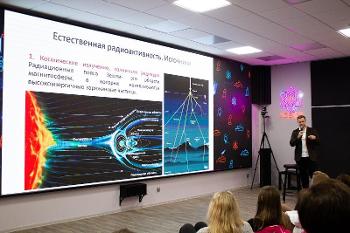
Anton Popov reminded the guests of what radiation is, the sources of natural radioactivity, and its effects on the human body. He then spoke in more detail about the cancer treatment options available at the moment, focusing on the advantages of proton therapy:
“It is characterised by a low level of irradiation of the tissue surrounding the tumour and a lower cumulative dose of radiation per treatment course. In addition, it reduces the risk of side effects and improves the quality of life of patients during and after treatment.
Anton Popov also spoke about the possibilities of boron neutron capture therapy.
“At the moment, one of the most promising methods of fighting cancer is boron neutron capture therapy. Boron-10, a stable isotope, absorbs neutrons very efficiently: the thermal neutron absorption cross-section is 3,837 barns, while the neutron absorption cross-section of most elements is only about a few barns (2.3 MeV per 5-7 μm). The widespread use of BNCT is due to the limitations of the existing technology, namely the use of a nuclear reactor as a source of neutrons,” the speaker stressed, concluding his presentation.
“Energy of Science” is a project that brings top experts in Russia to the regions where the NEIC network operates. Visitors to lectures, popular science talks, and master classes hosted by experts can learn about the latest scientific news, get answers to their questions, and discuss topical issues from the world of discovery and technology.
Text by: Natalia Valter