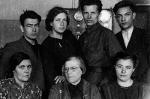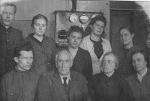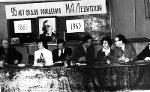
On 1 April it was 140th birthday anniversary of Professor Maria Afanasievna Levitskaya. She became one of the first female physicists in Russian and world science. Maria Levitskaya had an amazing scientific career for a woman in Russia at the turn of the century. She spent a significant part of her professional career, the last 28 years, at VSU.
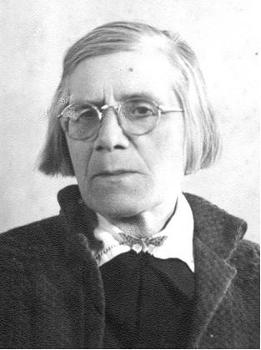
Maria Levitskaya was born on April 1, 1883 in Tashkent, in a poor noble family. In 1906 she graduated from the Faculty of Physics and Mathematics of the Higher Women's Bestuzhev Courses in Saint Petersburg. At this stage, her main teacher in physics was associate member of the Saint Petersburg Academy of Sciences, an honorary member of the Russian Academy of Sciences, the author of the famous "Physics Course", a professor of Saint Petersburg University Orest Khvolson. On the recommendation of the scientist Khvolson, the last two semesters (1905–1906) Maria Afanasievna spent at the University of Berlin, specializing under the supervision of the greatest physicists of that time, Max Planck and Paul Drude. The connection with the first, great supervisor continued after her return to homeland: scientists maintained correspondence for decades, until the death of Max Planck.
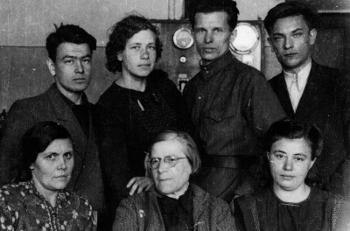
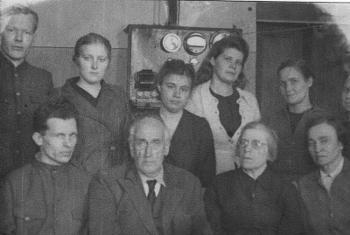
In 1911–1914, Maria Levitskaya continued her education at the Faculty of Philosophy of the University of Göttingen, and then completed a year of internship in Holland, receiving a scholarship from the Academic Committee at the Academy of Sciences. The beginning of Professor Levitskaya's independent scientific activity was during an important historical period in the development of physics, when the generation of high-frequency radiation had fundamental importance for the experimental confirmation of the theory of James Clerk Maxwell. Then the most interesting range was the “blank” (unfilled) region of the electromagnetic wave scale between radio waves and visible light. The terahertz region still remains one of the most important and underdeveloped regions.
In 1924, Maria Levitskaya published her main discovery about reaching the UHF range (0.2 mm) in the German physics journal Physikalische Zeitschrift. Maria Levitskaya proved the unity of the electromagnetic nature of radio waves and light in a single scale of electromagnetic oscillations by the key discovery of submillimetre waves. These classic results have become an outstanding achievement of domestic and world science and have been included in the textbooks of the general course of physics (for example, S.E. Frish, A.V. Timoreva "Course of General Physics"). A particularly high assessment of this scientific success was provided by Academician Sergei Vavilov.
In 1915–1917, Maria Afanasyevna worked at the Petrograd Polytechnic Institute and investigated the spectrum of palladium. From 1924 to 1934, Maria Afanasyevna worked at the Leningrad Institute of Physics and Technology at the invitation of its first director, Academician Abram Ioffe. She supervised the subdivision of ultrashort waves and was engaged in the development of research dedicated to generation and study of the properties of submillimetre waves. However, Maria Levitskaya's research was not limited to the problems of generation of ultrashort waves. Under the supervision of Abram Ioffe, together with Maria Kirpicheva, she performed research fundamental for solid state physics: X-ray studies of the electromechanical and deformation properties of classical solids, rock salt, and quartz monocrystals. The results of these studies were published in the journal Nature.
The Academic Council, as well as the list of heads of departments of the Physico-Technical Institute, included famous academicians: Igor Kurchatov, Anatoly Alexandrov, Nikolai Semyonov, Yakov Frenkel, Nikolai Papaleksi. Among them was only one woman, Maria Afanasyevna Levitskaya.
In 1934–1935, Maria Levitskaya worked at the Leningrad State Optical Institute. Upon the request of Academician Sergei Vavilov, the future President of the USSR Academy of Sciences, the scientist publishes a unique monograph "Infrared Rays". After this publication, she was awarded the degree of Doctor of Sciences (Physics and Mathematics) for outstanding scientific achievements. The degree was awarded without defence of thesis, following Igor Kurchatov.
In 1935, at the invitation of the rector of the Voronezh State University, Anatoly Norin, Maria Levitskaya moved to Voronezh and became the head of the newly created Department of Theoretical Physics. The last 28 years of her life, Maria Afanasievna worked in VSU.
In 1937, Maria Levitskaya created the department of electromagnetic oscillations at the Faculty of Physics and Mathematics. This became a defining event and the basis for the modern Physics Department of VSU. The Department of Radiophysics was formed from this department (1953). Subsequently, it became the basis for other departments of the faculty: the Department of Physics of Semiconductors and Microelectronics (1959) and the Department of Electronics (1962); Department of Nuclear Physics (1959); Department of Solid State Physics (1961); Department of Optics and Spectroscopy (1961). Maria Levitskaya led the development of a variety of fundamental scientific research and took part in them.
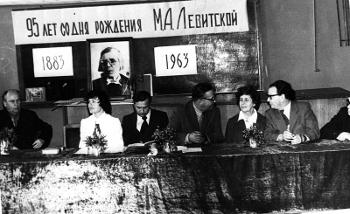
The works of Maria Levitskaya in Voronezh were devoted to the generation of short electromagnetic waves, solid state physics, X-ray diffraction analysis, infra-red spectroscopy, and nuclear physics. In the post-war period (1943–1952), Maria Afanasyevna was engaged in research on the structure of atomic nuclei, beta decay, continued work on the study of infra-red waves, their detection, investigated with diffusion in solids, studied X-ray spectra of alloys and intermetallic compounds, and optical spectra of thin metal layers. Together with Professor Robert Dopel, one of the leaders of the German nuclear project and a participant in the Soviet atomic project, Maria Afanasyevna organized a nuclear spectroscopy laboratory, which became the basis for the Department of Nuclear Physics.
Professor Maria Levitskaya had the undoubted talent of an outstanding experimental physicist. The scientist had a deep understanding of the theoretical foundations and ideas of physics, she was able to choose relevant areas of research. The results of the work of Maria Levitskaya were published in more than 50 articles, in the monographs "Universal gravitation from a historical point of view", "Infra-red rays" and in the last unpublished manuscript "Vortex model of the nucleus".
Maria Afanasievna devoted her whole life to physics and she was not indifferent to the participation of women in science. This is confirmed by the entry in the diary of the non-partisan professor Maria Levitskaya dated March 17, 1958: “... I took an oath to work for women's liberation... The rights of a woman are given by socialism and communism, but this does not at all solve my task in relation to women. I decided to show that a woman is capable of science and can do something.... What she could, she did.
Yes, she did the most important thing! The main result of the selfless work of Maria Levitskaya in the operation of the military and post-war physics department of Voronezh State University was the creation of one of the largest physics science schools in the country. Today it has more than 50 employees with a DSc degree and more than 200 employees with a PhD degree. Students of the professor became the founders of well-known scientific schools of theoretical physics, solid state physics, radiophysics, optics and nuclear physics in Russia and abroad. Unfortunately, all these successes and the recognition of the departments and scientific directions formed by Maria Afanasyevna happened only after her death, on March 7, 1963.
To mark the 140th birthday of the professor, the Anniversary Committee, headed by the dean of the Faculty of Physics, is preparing for publication a two-volume collection of research papers by Maria Levitskaya. Several events dedicated to the anniversary also took place.
Last year, on 28 April, an online conversation “Maria Afanasievna Levitskaya, one of the first female physicists in Russia. Memoirs of Evelina Pavlovna Domashevskaya” was held in the Voronezh Regional Universal Scientific Library named after I.S. Nikitin. Then, in October 2022, at Levitskaya Physics lecture hall, a meeting with the Honoured Artist of the Russian Federation Yuri Utenkov, the author of the Icarus mural was held. The composition depicts the professor in the centre surrounded by her students. The mural was completed for the 100th anniversary of Maria Afanasievna in 1983.
On 6 March, this year the opening of a book exhibition of outstanding scientists of Voronezh took place in Nikitin library. At the event, Professor Evelina Domashevskaya presented books, scientific materials and photographs connected to Maria Levitskaya. The book "Physics Faculty of Voronezh State University", 2021, published by the Publishing House of Voronezh State University, which is dedicated to the 60th anniversary of the establishment of the Faculty of Physics, was presented.
On 20 April, the Final Scientific Session of the Faculty of Physics 2023 will be held. Several plenary reports will be devoted to the development of the scientific heritage of Maria Levitskaya in various area of physics – from submicron electromagnetic waves to nuclear physics.