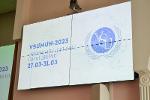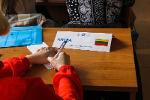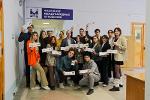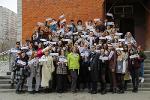
Between 27 and 31 March, the Faculty of International Relations held Model United Nations. 60 students from Voronezh tried on the role of representatives of various countries. The participants had to go a long way towards approving a resolution on an urgent global problem.
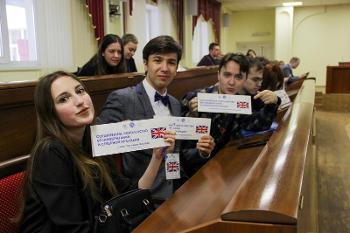
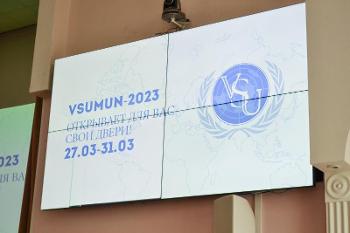
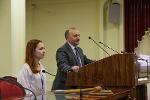
On the first day, the delegates were registered and assigned to various committees: the Security Council, the Human Rights Council, and the General Assembly. There was also an opening ceremony with welcoming speeches by VSU Vice-Rector for Research, Innovations, and Digitising, Oleg Kozaderov, and third secretary of the representative office of the Ministry of Foreign Affairs of the Russian Federation in Voronezh, Anton Kokorin.
The participants were also welcomed by Oleg Belenov, Dean of the Faculty of International Relations, and Yuliana Tarasova, the General Secretary of the VSU's Model UN, who talked about the history of the business game.
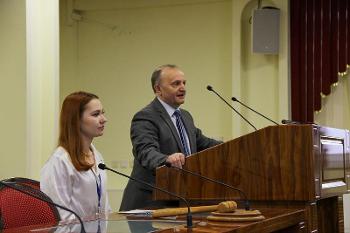
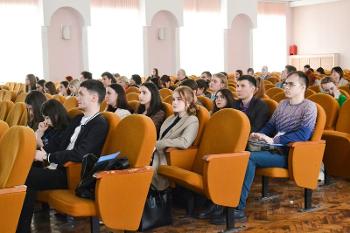
“The first UN Model was organised in the USA in 1947, and in 1990 it was held in Russia. After a 5-year break, we are holding another UN Model in Voronezh”, said Oleg Belenov.
“The students of Voronezh State University organised a wonderful event aiming to raise awareness of the most important problems in world politics, global values, and political science in general. I hope this event will grow and become even more interesting over time!”, said the General Secretary of the VSU's Model UN Yuliana Tarasova.
The next speaker was Alexander Abramov, a graduate of the Faculty of International Relations, who now lives in Argentina.
“Show them Kuzka's mother!”, said the graduate to the participants of the UN Model.
After lunch, the delegates participated in a training session concerning the rules of the meetings. They learned about the procedure of formal and informal debate, the ways to amend a document, and the rules of UN Model. For example, to make a suggestion, delegates should raise their hand and say: “Procedural suggestion!”. Only then will the chairmen allow them to speak.
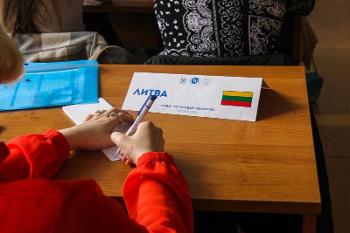
The second day started with a heated discussion. Each committee had its own agenda: The Security Council discussed the “Developments in the Middle East”, the Human Rights Council talked about “Combat against modern forms of racism, racial discrimination, xenophobia, and the resulting intolerance”, and the General Assembly considered “Aiding in elimination of violence towards migrants, migrant workers, and their families”. Members of each committee prepared statements on behalf of their countries and later on had to argue their position. Other delegates could ask relevant questions. Any irrelevant questions were declined.
After the discussion, representatives of various countries formed coalitions to work out solutions for their problem, the same way partner states form coalitions in real life.
On the third day, the participants were to develop their resolutions. The discussion was held outdoors. There was also a quiz about fake news and a lecture on the problem of racism today.
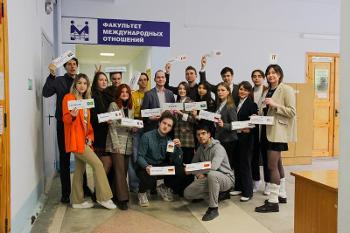
The fourth day was the busiest of all. The coalitions presented their resolutions and introduced amendments. On the fifth day, a closing ceremony took place, and the participants received certificates. The ceremony also determined the most active delegates in each committee.
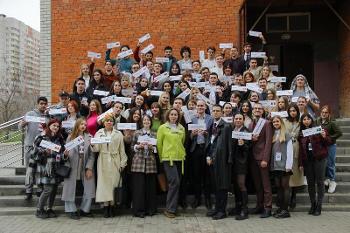
A lot of students enjoyed the game.
“You can learn about international developments and hear your colleagues out. It teaches you to be patient and pay attention to other speakers. What I liked the most, though, was an opportunity to meet so many people. It was a great experience!”, Said Polina Zheludkova, a third year student from the Faculty of International Relations.
Text: Irina Bashkirova
Photo: from the VSUMUN-2023 VK page