
Space is an evasive area, which will remain a mystery for many years to come. Every day lots of people work hard to lighten the “dark” space a bit for us. Thousands of people all over the world work on the problems associated with space exploration. It is great to know that our country has remained one of the leaders in the industry for a long time. It is even greater that it is in Voronezh, since the times of the USSR, that the heart for every Russian rocket, i.e. the engine, is designed and manufactured.
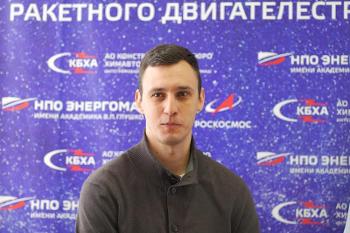
On the Cosmonautics Day we talked to a man who is involved in space flights no less than the astronauts themselves. A VSU graduate and currently an employee at the Chemical Automatics Design Bureau (KBKHA) and an expert of the Innovation League Alexander Afanasiev told us about becoming the lead modelling expert, contributing to space exploration, and watching a space launch.
You studied at VSU. Why did you choose this particular university and specifically the Department of Mechanics and Computer Modelling of the Faculty of Applied Mathematics, Informatics, and Mechanics?
I entered VSU back in 2006. A lot of people advised me to enrol on the same programme at the Technical University, but I decided that it should only be Voronezh State University. It’s a great brand. Why the Faculty of Applied Mathematics, Informatics, and Mechanics? IT is a very promising sphere and even at that time it was actively developing.
People born after 2000 find it surprising that IT existed at all back in 2006. What did you learn at the faculty in those times?
The Faculty of Applied Mathematics, Informatics, and Mechanics is actually pretty old, and our department was the first one to open. It focused on the problems of solid mechanics, hydraulics, and gas dynamics, i.e. the problems that KBKHA works on. There are a lot of graduates from our department at KBKHA, and they are considered to be excellent computing engineers. Our department should not be considered as an IT department as such. It’s rather a combination of basic fields such as continuum mechanics and computer modelling. It is at the intersection of industrial production and information technologies.
Tell us about your university years. Were you a good student?
There are two “satisfactory” marks in my diploma. I realised that I had to study hard a bit too late. I started paying attention to my studies when I was in my third year and we had specialised subjects concerning mechanics. After obtaining my bachelor’s degree I was thinking about finding a job in the car industry, but then I decided not to. I had studied for four years at university and enrolled on a master’s degree programme, so I though it should not be all for nothing. I quit my part-time jobs and concentrated on my studies.
Why did you apply for a job at KBKHA?
When I was a first year student, I learned that KBKHA was one of the partners of our department. We were told that a lot of graduates worked there. I learned more about the company during my internship organised by Associate Professor of the Department of Mechanics and Computer Modelling Evgeny Korzhov. 3 months after the internship I joined the company. I also wanted to enrol on a PhD programme, and KBKHA encourages scientific studies, so the company supported me here. So it was my internship and the PhD programme that determined my choice.
By the way, I have another idea as to why I chose KBKHA. When I was a child, my parents had a country house next to one of the testing facilities, so I could see and hear rocket engines being tested in real life. It’s really awesome to see something like this.
In this case, you probably couldn't help seeing and hearing them.
Yes, I remember the windows rattling. Here is an interesting thing. They say it’s great to see a rocket launch. During the launch you are standing in quite a distance, so you don’t feel the sound the way you do at the testing facility when engines are tested right in front of you. Our colleague Elon Musk sells tickets for rocket test launches. There is a Feel the Heat package, which means you literally are going to feel the heat of the engines during the test launch.
There are a lot of VSU graduates among the employees of KBKHA. Are there graduates from other universities?
Design engineers are mostly graduates of Voronezh State Technical University and other universities. Specialists in computer modelling of physical processes are usually graduates of VSU. VSU specialises in science-intensive technologies. Design engineers even have a special name for us. When they see computing engineers they say: Look! Here comes the Science!
What is KBKHA working on now?
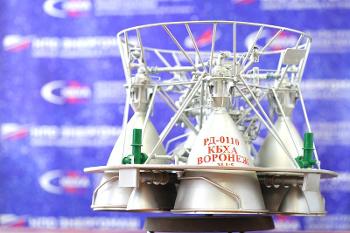
The company runs a complete design and production cycle of rocket engines, from the manufacturing of the parts to the final testing. All space rockets have our engines.
KBKHA is the most productive enterprise in the history of rocket engine manufacturing in Russia. Over 70 engines have seen full-scale hot tests. Starting from the time of the USSR and up to now, all the engines for strategically important rockets have been produced here. Information about the company used to be classified. Even the names of the chief designers were kept secret. For instance, the name of Sergey Korolev was kept secret for a long time, and not many people knew who Semen Kosberg was.
What does your job involve exactly?
I’m a chief modelling specialist. My job is to model physical processes associated with hydraulics and gas dynamics, heat exchange, and strength. Let’s say the temperature inside the combustion chamber of a rocket engine is 3500–4000 degrees. So, it’s impossible to look inside, anything will burn in there. Only by using mathematical modelling can we look inside the combustion chamber and see what happens inside the turbopump unit, which pumps the fuel.
What difficulties do young specialists face in your field?
Sometimes they get discouraged by a rather slow start. You have to learn all the time, acquire more knowledge, and process large amounts of information. Computing engineers do not get to work on real projects right from the start. We analysed the situation thoroughly and came to the conclusion that it requires 5–7 years for a young engineer to be able to work independently on a real project. You have to learn for quite a long time to get all the details. And you need a certain mindset for this.
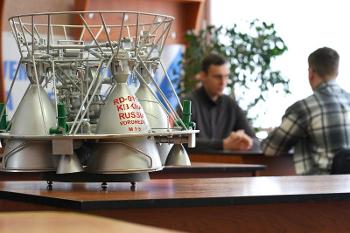
In the hallway of this building there are old photos that show people assembling engines manually. How do you do this today? How much is the process automated?
We have a PLM system (Product Lifecycle Management), which is a digital system that monitors the whole production cycle. Our latest engines are assembled with the help of the PLM system. However, since every engine is unique and requires maximum attention, a lot of assembling stages cannot be automated. All the parts are manufactured automatically, but assembly is largely a manual process. It’s too important to rely on a machine.
The Chemical Automatics Design Bureau is currently conducting more R&D projects than it used to in the Soviet times. And we can work on more engines at a time than it was possible even when the industry was at its best. We are currently working on an oxygen-kerosene rocket engine, an oxygen-methane engine, and an oxygen-hydrogen engine. I.e. we are considering all the possible fuel components and test engines of various types of thrust. We are also working on the idea of reusable engines.
The company has a lot to do and the industry itself is paid a lot of attention.
Text: third year student of the Faculty of Geology Daniil Sopin
Photo: Dmitry Chernov