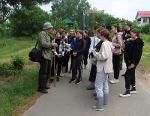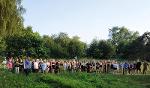

Between 9 June and 3 July, first year students from the Faculty of Biomedical Sciences of VSU completed a field educational practice dedicated to the diversity of regional fauna. This practice is a mandatory part of the educational process for students who complete the Biology programme.
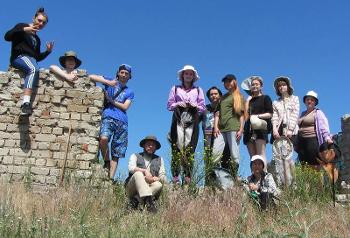
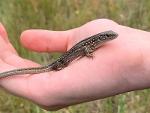
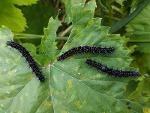
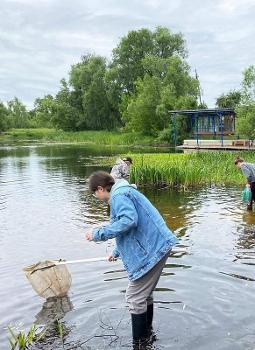
The first 12 days of the practice were traditionally held at the “Venevitinovo” Educational and Research Bioсentre where students got acquainted with the variety of invertebrates and vertebrates and under the guidance of their lecturers mastered field methods for studying regional fauna. In Usmansky Pinewood Forest where the biocentre is located, there are a huge number of species of invertebrate animals. The brightest and most common of them are insects: butterflies of the most amazing colours, speedy dragonflies, ubiquitous beetles and bugs, mysterious snakeflies, and antlions.
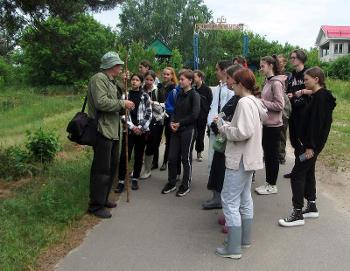
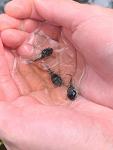
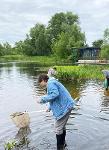
Also, a large number of vertebrates are found in the vicinity of the biocentre: nearly 20 species of amphibians and reptiles, about 50 species of mammals, and over 150 species of birds. The Usman River and forest reservoirs are inhabited by many different aquatic organisms: from protists and aquatic arthropods to fish and amphibians.
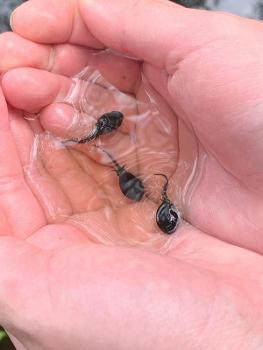
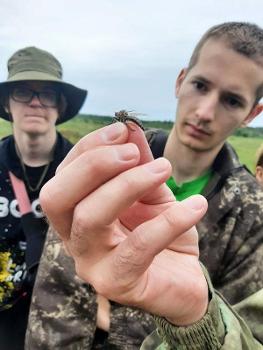
“The Venevitinovo Biocentre, or former VSU zoo station, has been the main base for field practices for biology students for almost 80 years. Among its advantages are its proximity to the city and the presence of a large number of unique natural places with a high variety of animals. Museum “Nature of Usmansky Pinewood” also plays a significant role in the students’ training. This is not only due to a large number of fauna exhibits, but also because the museum has become a venue for lectures and meetings with various zoologists,” said Alexey Lopatin, Director of the biocentre.
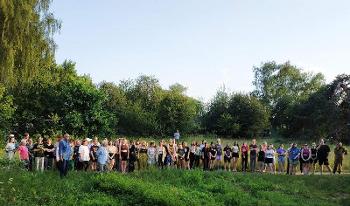
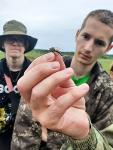
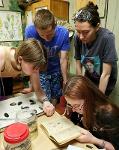
The field practice consists of various sections or modules, each of which is supervised by one of the lecturers, a specialist in a particular group of animals. Within these modules, students go on thematic trips, learn to use field zoological equipment, master the skills of determining species in nature, and work in field laboratories.
During the internship, first year students also attended the exhibition of illustrations of the new edition of the Red Book of Russia which opened at the museum “Nature of Usmansky Pinewood”, attended popular science lectures by Yuri Mizin, a famous zoologist and polar explorer, and Alexander Prokin, the leading researcher of the Papanin Institute for Biology of Inland Waters of the Russian Academy of Sciences and a leading biologist of the “Venevitinovo” Biocentre. They also were present at the first showing of the documentary film about the nature of Kamchatka by Sergey Sobolev, Head of the museum “Nature of Usmansky Pinewood”.
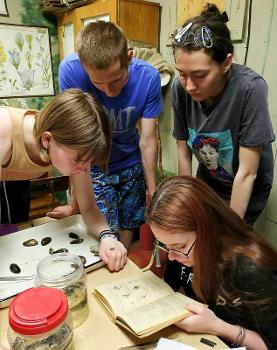
“Every day of the field practice follows a certain plan. The most interesting part is excursions with lecturers and participation in open-air lectures. It’s one thing to listen about an animal in class at the university, and it's quite another to see it with your own eyes. It seems to me that when we graduate our brightest memory will be of this practice when we were running around trying to catch a dragonfly or a butterfly with our entomological nets or were hiding with binoculars on the shore to spot a heron or a duck,” said Oxana Seredina, a first year student.
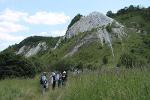
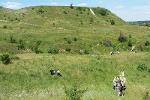
The second part of the field practice for biology students was held at the university and involved excursions to various places and institutions. For example, during a trip to the vicinity of the village of Storozhevoye, students were able to get acquainted with the fauna of chalk outcrops where they saw colonies of groundhogs and rare steppe insects.
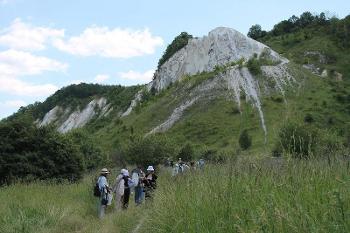
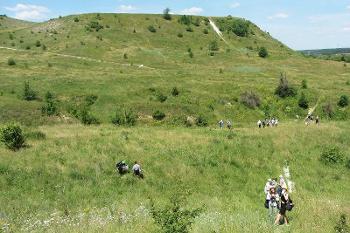
“I absolutely enjoyed it! Thanks to the field practice, I visited a lot of interesting places. The tour to Storozhevoye was just unforgettable! I really enjoyed catching all sorts of bugs. By the end of the practice, I had got hand in it. It was very informative and a lot of fun,” said Sofia Manuilova, a first year student.
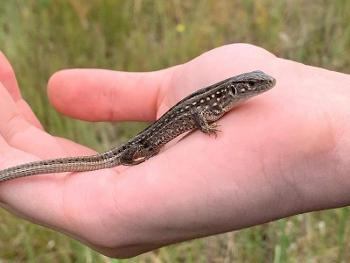
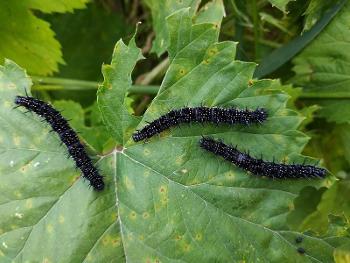
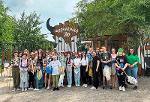
During a visit to the Popov Voronezh Zoo and its breeding station “Chervlyony Yar”, students had a chance to see many animals that are found in the wild in different parts of the world. During a trip to the Peskov Voronezh State Nature Biosphere Reserve, students visited the Museum of Nature, the Peskov Museum, a Beaver Site, and the Cherepakhinskaya ecological trail.
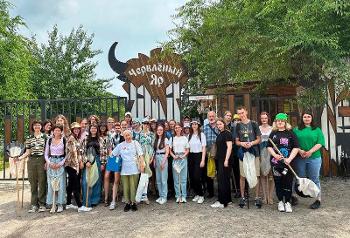
“Field practices are important not only because they help train highly qualified biologists, they are a unique brand of the Faculty of Biomedical Sciences of VSU. Field practices and expeditions are absolutely essential for developing a real naturalist and a professional biologist with a broad outlook,” said Evgeny Axyenenko, Deputy Dean of the Faculty of Biomedical Sciences, Associate Professor at the Department of Zoology and Parasitology.