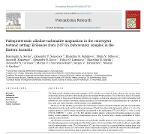
VSU scientists have discovered the oldest carbonatite complex on Earth, formed in a modern tectonic style. The complex is more than two billion years old. The article about the discovery written by Konstantin Savko, Professor of the Faculty of Geology, was published in the prestigious first quartile scientific journal Precambrian Research. It was nominated for the Best Researcher Award.
The article presents the results of a study of a unique type of carbonatite magmatism in the Early Precambrian. There are no more than ten similar occurrences in the world, and one of them is located in the Voronezh crystalline massif. Scientists established that this carbonatite complex is the most ancient and it was formed in the style of modern tectonics: the scientist call it “the first sign”.
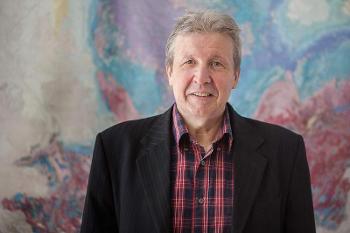
“These are very specific magmatic rocks. Magmatic rocks as we know them are usually granite and gabbro. In our case, these are the rocks consisting of carbonates. Actually, they are magmatic calcium carbonates, similar in composition to limestones, and their carbonate matter is from the mantle,” said Konstantin Savko.
Previously, we had limited opportunities to study such complexes as there were no technologies for precision research. Now the complexes have been studied by precise methods of elemental and isotope geochemistry. Using U-Pb isotope geochronology, we determined the exact age of the rocks using several minerals at once. And the age is impressive – it is 2.074 billion years old.
“This research and discovery are unique due to the fact that back in the middle of the 20th century, nobody believed that carbonatites came from the mantle in the form of melts. In the 1980s, they were studied by VSU scientists at the level of that time, without the geochemistry studies of rare elements and isotopy. And now the world literature finally has an example of the most ancient carbonatites that had been formed immediately after subduction (one lithospheric plate immersed under the other), in the style of modern tectonics.
The article was nominated for the Best Researcher Award in the category International Research Awards on New Science Inventions. The co-authors of the article include three corresponding members of the Russian Academy of Sciences.
Text: Irina Golik Photo gallery