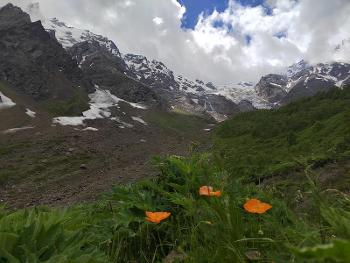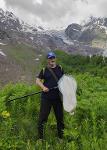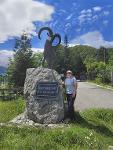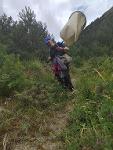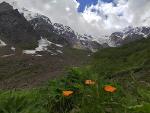

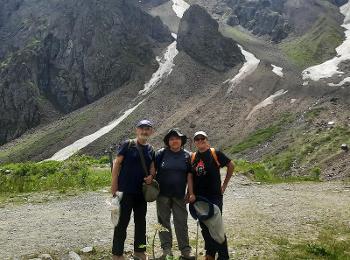
Members of the Department of Zoology and Parasitology at the Faculty of Biomedical Sciences of VSU conducted their field studies in the mid and high mountains of the North Ossetia Nature Reserve. The expedition was a part of the partnership agreement between Voronezh State University and the reserve. The expedition included head of the department Professor Viktor Golub, senior researcher Natalia Golub, and research assistant Viktoria Soboleva.
It was also a part of a larger project on studying the history and the current development of the fauna of the central Eurasia mountain ecosystems, using the Hemiptera species as a model group. The study was supported by the Russian Science Foundation.
“We chose to conduct our field studies in North Ossetia because the region has not been thoroughly studied yet. It is rather difficult to study due to its landscape and the fact that a lot of mountain ecosystems are located high in the mountains and are therefore hard to get to. This is why there have been so few expeditions to the area”, said the head of the expedition Viktor Golub.
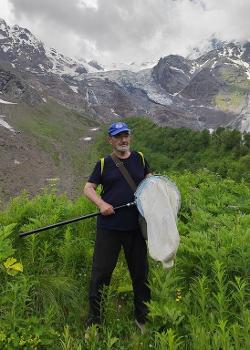
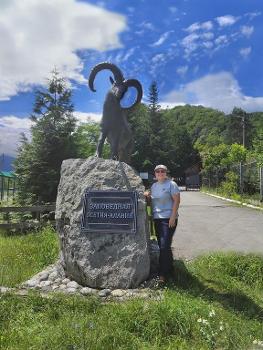
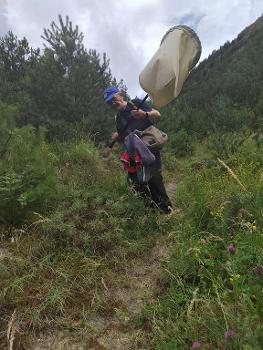
The first stage of the expedition took place in the village near the former Mizur mining and processing plant. A lot of houses there are literally “stuck” to the walls of the gorge of the river Ardon. From this base camp, VSU entomologists went on field trips to the deep Ardon, Bad, and Arkhon gorges.
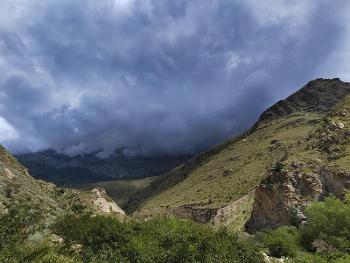
The second stage of the expedition took place in the Tsey region of the reserve. There the researchers went through several mountain altitudinal belts, from broad-leaved forests to alpine meadows. During the expedition they collected unique materials and valuable data regarding the ecology and the fauna of the region. They determined over 150 Hemiptera species and described their characteristics depending on the altitude and the exposure of slopes, and their characteristic flora. The group also managed to find the habitat of some local plant pests and define the size of their population. They also found Stephanitis caucasica – the endemic species of the Main Caucasian Range and the Pontic Mountains. The species is a great threat to the Caucasian rhododendron.
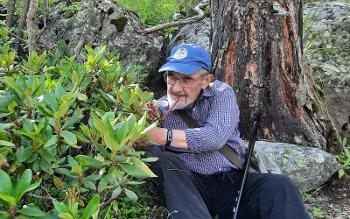
“We will study the collected materials using morphological, karyological, and molecular methods and review the taxonomy of some of the Stephanitis caucasica in the overall fauna in Russia and neighbouring countries”, said Viktor Golub.